Key Benefits of EECP Therapy for Heart Patients: What Can You Expect?
For many people with coronary artery disease, the hardest part is not a test result but ordinary life: stopping halfway up a flight of stairs, cutting an evening walk short, or lying awake after a day of chest tightness. When blood flow to the heart muscle falls short, discomfort, breathlessness and fatigue can slowly shrink what feels possible.
Heart disease is also being reported at younger ages across India, as this Express Healthcare report highlights, so knowing your options matters more than ever. That is why interest in non-invasive cardiac care keeps growing, and why so many patients ask about the benefits of EECP therapy.
This guide focuses on what EECP may realistically do for you: its key benefits, how they differ by condition, when they tend to appear and how to make them last.
Introduction about EECP Therapy
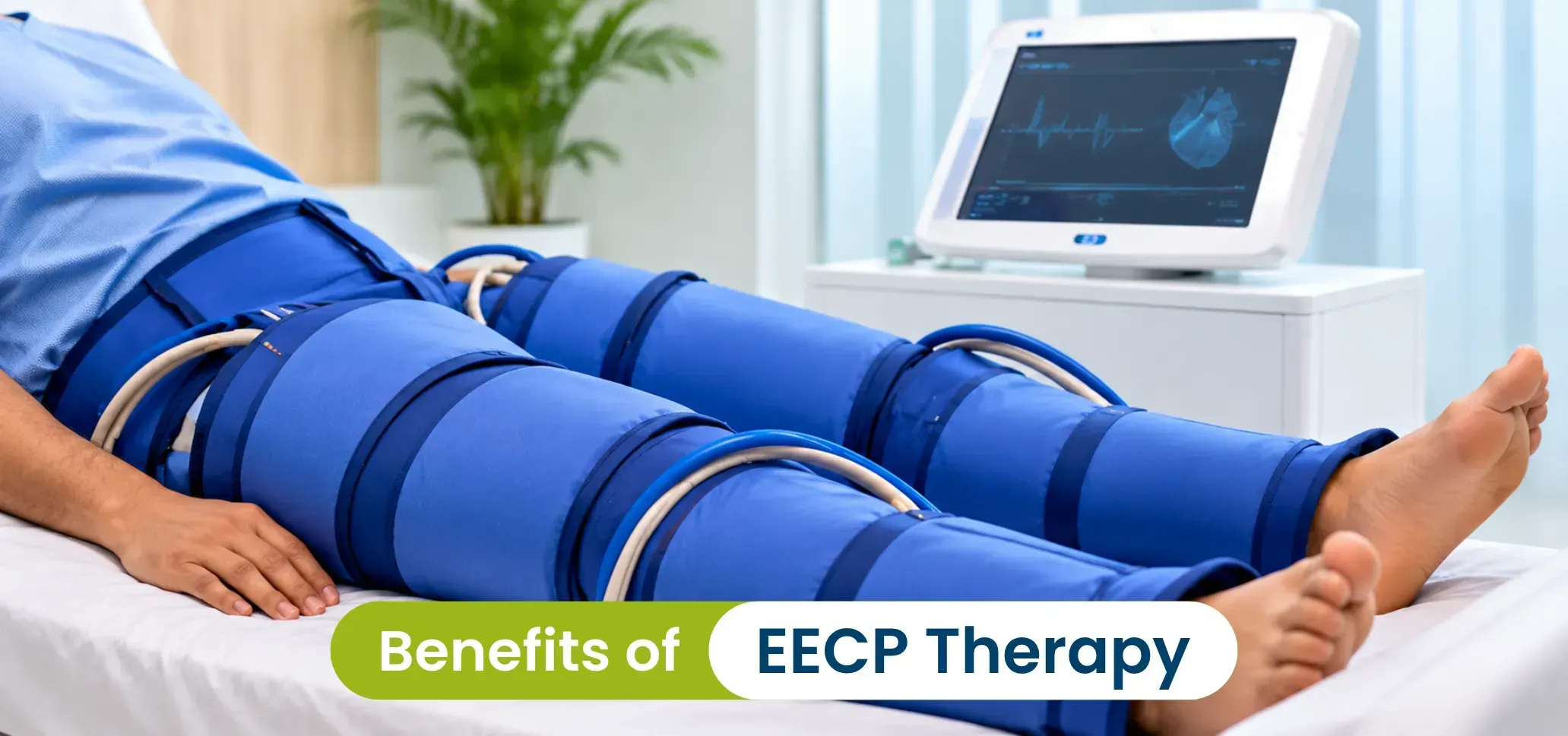
EECP is an outpatient treatment for selected heart patients, mainly those with chronic stable angina. Cuffs on the calves, thighs and buttocks inflate and release in time with your heartbeat, a principle called counterpulsation. This raises pressure in the arteries while the heart rests and eases the heart’s workload when it pumps. The result is better circulation to the heart muscle and, over a course of treatment, a gradual change in symptoms. EECP is not a cure for coronary artery disease, and its benefits depend on careful patient selection by a cardiologist.
7 Key Benefits of EECP Therapy for Heart Patients
1. Fewer and milder angina episodes
The most consistent benefit is relief from angina. Clinical references describe fewer and less frequent angina symptoms after a course, along with increased energy, because better circulation to the heart muscle means less of the strain that triggers chest pain. Some patients find that pain arrives later during activity, or less often.
2. Better exercise tolerance and stamina
By easing angina, EECP can help people walk further and manage stairs or household tasks with less discomfort. Treatment programmes report an improved exercise ECG response and longer exercise duration afterwards, which is why a stress test before and after the course is a useful yardstick.
3. Improved blood flow and oxygen delivery to the heart
Timed leg compression raises pressure in the coronary arteries during the heart’s resting phase, when most of its own blood supply arrives. Over repeated sessions, it may also support small collateral vessels and healthier blood vessel lining, although how much this contributes varies from patient to patient.
4. Possible reduction in angina medicines and nitroglycerin use
Some patients need less nitroglycerin or fewer symptom-relief tablets after EECP. Any change to your medicines must come from your cardiologist. Never stop or reduce prescribed heart medication on your own.
5. Better quality of life and confidence
Chronic angina affects sleep, mobility and confidence as much as the heart itself. Studies in refractory angina report better quality of life alongside improved exercise tolerance. Less chest discomfort can mean more social plans, more travel and more independence.
6. Non-invasive, outpatient and convenient
You rest on a treatment bed, there are no incisions or catheters, and you go home after each session. Most people can carry on with their normal routine around their appointments. That makes EECP worth discussing for people who want to avoid, or are not suitable for, another procedure.
7. A symptom-relief option when other choices are limited
For people with persistent angina despite medicines, where further stenting or bypass is not suitable, EECP can be discussed as an additional option. That decision belongs to your cardiologist after a detailed assessment, and EECP does not replace angioplasty or bypass surgery when those are medically necessary.
Benefits of EECP Therapy by Condition
Coronary artery disease and chronic stable angina
This is where the evidence is strongest. A typical candidate has chest pain on exertion that medicines alone have not fully settled. Studies in patients with refractory angina who were unsuitable for, or unwilling to have, revascularisation report improvements in angina, exercise tolerance and quality of life after EECP.
Heart failure and left ventricular dysfunction
In 2002, the US FDA cleared EECP for patients with angina who also have heart failure. A systematic review concluded that a standard course is safe in stable ischaemic heart failure and can significantly improve quality of life, with possible gains in cardiac function and fewer short-term hospital readmissions. Two cautions apply: the findings relate to stable heart failure, not worsening heart failure, and individual results vary, so selection by a cardiologist matters. Our guide to daily habits that help in heart failure covers the lifestyle side.
Cardiac Syndrome X (microvascular angina)
Some people have angina even though their main coronary arteries look open on angiography, a pattern known as Cardiac Syndrome X or microvascular angina. Specialist centres consider EECP for patients with non-obstructive coronary artery disease and persistent symptoms, including microvascular disease. Small studies report better small-vessel circulation, blood vessel function and coronary flow reserve, but this evidence base is smaller than for classic angina, so discuss it with your cardiologist.
When Will You Notice the Benefits of EECP Therapy?
Response varies from person to person. Some patients notice fewer angina episodes or easier walking during the course, while others see the change after completing the full programme. The severity of artery disease, overall health, diabetes and blood pressure control all influence results.
Many people report improved symptoms for up to a few years, although some notice symptoms creeping back and discuss a repeat course with their doctor. A stress test during treatment and a simple angina diary are practical ways to track change objectively. A standard course usually involves around 35 one-hour sessions, so patience matters.
How to Make the Benefits of EECP Last
EECP works best as part of a wider heart-health plan:
- Take prescribed medicines as directed and keep regular cardiology follow-ups.
- Manage diabetes, blood pressure and cholesterol, since they influence how well your heart responds.
- Eat a balanced, lower-salt diet and keep to a healthy weight.
- Build activity gradually, ideally through a supervised cardiac rehabilitation programme.
- Avoid tobacco, and ask your doctor about stress and sleep.
Conclusion
The key benefits of EECP therapy include fewer angina episodes, better stamina, improved blood flow to the heart and a better quality of life for selected patients. It is not a cure for coronary artery disease and it does not replace medicines, angioplasty or bypass surgery when you need them.
If you are living with recurring chest discomfort and exploring non-invasive cardiac care, the next step is an assessment. You can book a consultation at Lyfstyle Wellness in Ahmedabad to discuss whether EECP treatment suits you.
Frequently Asked Questions
1. What are the main benefits of EECP therapy?
The main benefits of EECP therapy are fewer and milder angina episodes, better exercise tolerance, improved blood flow to the heart muscle and a better quality of life. Results vary, and a cardiologist should decide whether EECP suits your condition.
2. Can EECP therapy help heart failure patients?
In selected patients with stable ischaemic heart failure, studies suggest a standard EECP course is safe and can improve quality of life and exercise capacity. It is not suitable for worsening or decompensated heart failure, so your cardiologist must assess you first.
3. Is EECP therapy useful for Cardiac Syndrome X?
Some specialist centres consider EECP for people with microvascular angina or Cardiac Syndrome X who still have symptoms despite treatment. Small studies report fewer angina episodes and better small-vessel function, but the evidence is smaller than for classic angina, so discuss it with your cardiologist.
4. Can EECP replace angioplasty or bypass surgery?
No. EECP does not open blocked arteries. It supports circulation and helps manage symptoms, and it may be an option when procedures are unsuitable or symptoms continue after them. If you need angioplasty or bypass surgery, your cardiologist will advise it, and EECP should not delay it.
5. Can I stop my heart medicines after EECP therapy?
Not on your own. Some patients need fewer symptom-relief medicines after EECP, but only your cardiologist can review and adjust your prescription based on your response. Stopping heart medication without medical advice can be dangerous, even if your chest pain has improved.