
What Is HBOT Treatment? How Hyperbaric Oxygen Therapy Works
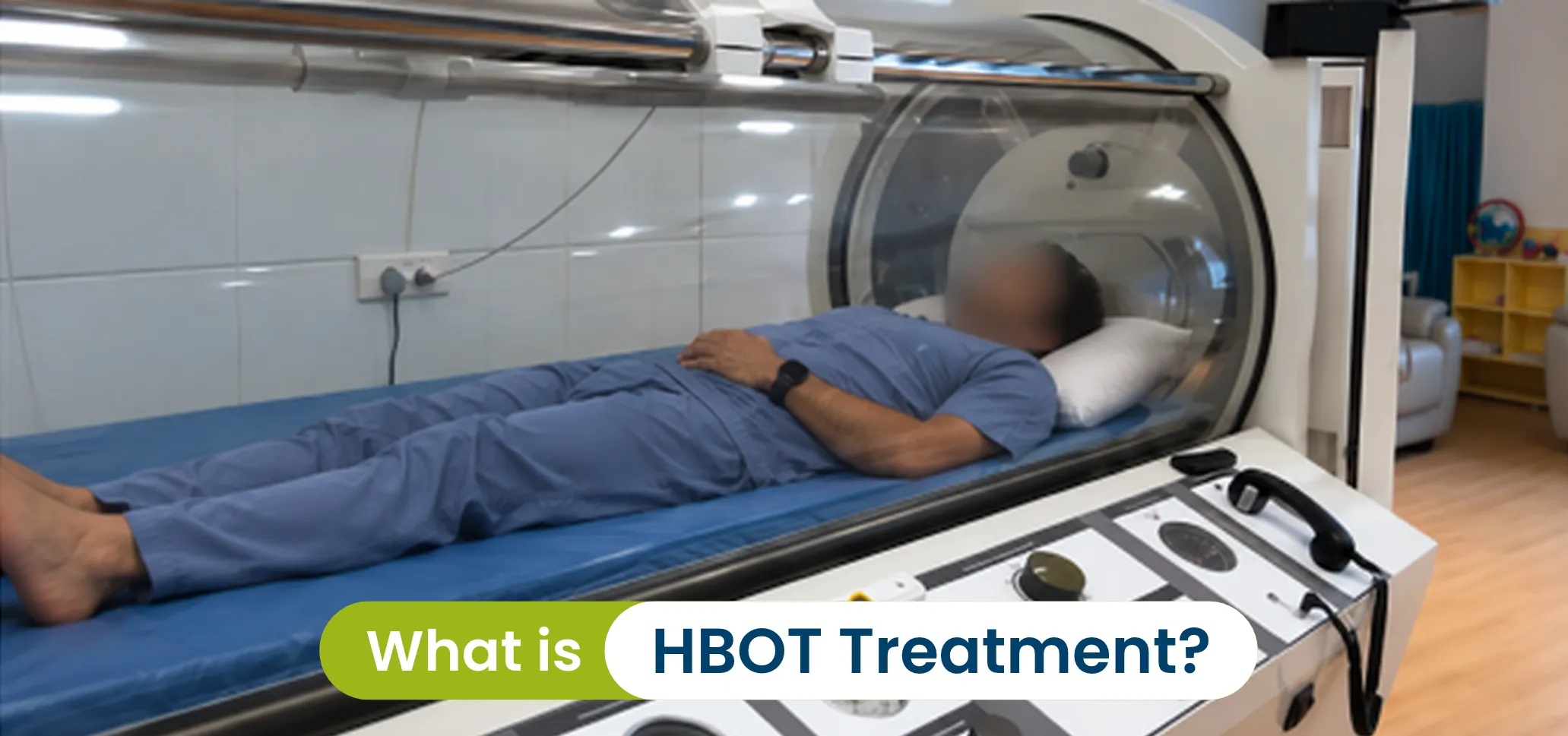
If a wound has refused to heal for weeks despite regular dressings, or radiation treatment has left lasting damage to healthy tissue, your doctor may mention oxygen therapy in a pressurised chamber.
Hyperbaric oxygen therapy (HBOT) means breathing 100% oxygen inside a chamber where the air pressure is higher than normal, so your blood carries far more oxygen to tissues that are struggling to heal. There is no surgery and no incision, and most people simply lie back and rest during treatment.
HBOT has solid evidence for certain conditions. This guide explains how HBOT works, what it is genuinely used for, what is still unproven, how safe it is, what a session involves and what to know about cost in India, so you can ask your doctor better questions before you commit to a course.
What Is HBOT Treatment and How Does It Work?
HBOT is a medical treatment in which you breathe 100% oxygen in a sealed, pressurised chamber. By definition, it uses pressure above 1.4 times normal atmospheric pressure, and medical chambers can go up to about three times normal. Under that pressure, far more oxygen dissolves directly into your blood plasma. That oxygen can reach tissues where blood flow is poor or damaged.
Once there, the extra oxygen is thought to help in three main ways: supporting wound healing and the growth of new blood vessels, helping the body fight certain infections, and reducing swelling in injured tissue.
What Happens in an HBOT Session?
You change into cotton clothing, and items such as lighters, electronics and oily products stay outside the chamber, because chamber fires are rare but serious. You then lie back while the pressure rises gradually. Your ears may feel full, much like during a flight, and swallowing or yawning helps. You breathe oxygen for the treatment period, and the pressure is then lowered slowly. A typical session lasts 60 to 90 minutes, and many patients read, listen to music or rest.
How many sessions you need depends on the condition. Acute problems may need only a handful, while chronic wounds or radiation injury often need a longer course over several weeks. Your doctor sets the plan, and protocols differ between centres.
What Does HBOT Treat?
- Hard-to-heal diabetic foot ulcers – Used alongside standard wound care in selected, more severe ulcers that are not improving.
- Delayed radiation injury – Late tissue damage after radiotherapy. One medical society strongly recommends HBOT for radiation proctitis, based on moderate-quality evidence.
- Chronic bone infection – Refractory osteomyelitis that has not responded to usual treatment.
- Serious soft-tissue infections – Necrotising fasciitis and gas gangrene, alongside surgery and antibiotics.
- Compromised skin grafts and flaps – Tissue at risk of failing because of poor blood supply.
- Carbon monoxide poisoning – and a few other specialised emergencies.
For wound problems, doctors often check oxygen levels in the skin first, using a test called TCOM, to see whether HBOT is likely to help.
What About Stroke, Brain Injury, Autism or Anti-Ageing?
HBOT is sometimes promoted for these, and some centres offer it. However, clinical references note that off-label uses such as autism, stroke and ADHD have not been proven to respond to HBOT. Research continues, and some people explore these options with their doctor. The same goes for claims about anti-ageing or general energy.
Benefits of HBOT Treatment
For the conditions where it is recognised, HBOT offers real advantages:
- Drug-free and non-invasive – No surgery, no incision, and you can relax in the chamber.
- Helps the right wounds heal – Extra oxygen helps tissue that is starved of it repair itself.
- Treating Infections – Supports the fight against serious illnesses alongside antibiotics and surgery.
- Treats late radiation damage – An option for delayed tissue injury after cancer treatment.
- Valuable in emergencies – It plays a key role in decompression sickness and carbon monoxide poisoning.
Wondering whether HBOT could help your condition? Book a consultation at Lyfstyle Wellness for a proper assessment.
Limitations of HBOT Treatment
- Not a cure-all treatment – Benefit depends heavily on the condition, and outside the recognised uses the evidence is thin.
- Needs commitment – Taking this treatment often means regular visits over several weeks.
- It works alongside standard care, not instead of it – Wound care, antibiotics, blood sugar control and surgery still matter.
- Side effects can occur – Ear and sinus pressure are the most common.
- It is not available everywhere – It needs a proper chamber and trained staff, which you can find at Lyfstyle Wellness in Ahmedabad, India.
Not sure whether HBOT is the right fit for you? Get a consultation at Lyfstyle Wellness and let the team review your case.
Is HBOT Treatment Safe?
How to Choose a Safe HBOT Centre
- Ask about the chamber and pressure
HBOT is defined as 100% oxygen at above 1.4 atmospheres. Lower-pressure soft chambers are not the same treatment. - Ask who supervises
A trained hyperbaric physician should set the pressure and duration and check you before and after sessions. - Ask for a written plan
It should state the condition being treated, the expected number of sessions and how progress will be measured. - Ask about safety rules
A good centre explains its fire safety and emergency procedures.
HBOT Treatment Cost in India
The cost depends on the condition being treated, the number and length of sessions, the type of chamber, the centre and city, and whether the package includes a medical assessment and follow-up. Ask for a written breakdown before you start, and check with your insurer about coverage. You can discuss costs with the team at Lyfstyle Wellness during your consultation.
Conclusion
HBOT is a genuinely useful treatment for the right conditions, particularly hard-to-heal wounds, late radiation injury and certain serious infections. It is not a miracle therapy, and the strongest evidence does not extend to everything it is promoted for.
The best next step is a proper assessment. At Lyfstyle Wellness in Ahmedabad, the team can assess your health condition and explain whether HBOT suits you. You can book a consultation or call us for more information.
FAQs
1. What is HBOT treatment used for?
HBOT is used for conditions with recognised benefit, such as hard-to-heal diabetic foot ulcers, delayed radiation injury, chronic bone infection, serious soft-tissue infections, compromised skin grafts, decompression sickness and carbon monoxide poisoning. Evidence for other uses, such as stroke or autism, is limited, so your doctor should explain what is proven.
2. Is HBOT treatment safe?
HBOT is generally safe in a proper chamber under medical supervision. Common side effects are ear or sinus pressure, and rare risks include seizures and chamber fires. Pacemakers, pregnancy and some medicines need review. Always get a medical assessment first.
3. How long does an HBOT session take?
A typical session lasts 60 to 90 minutes, including time for the pressure to rise and fall gradually. You lie back and breathe oxygen, and many people read, listen to music or rest. Your doctor sets the exact duration and pressure based on your condition.
4. How many HBOT sessions are needed?
It depends on the condition. Acute emergencies may need only a few sessions, while chronic wounds or radiation injury often need a longer course spread over several weeks. Your doctor will set a plan and review your progress during treatment, so ask for the expected number of sessions upfront.