
What Is ESMR Treatment? How Shockwave Therapy Helps the Heart
If chest pain shows up on a short walk or a flight of stairs, and your medicines no longer keep it in check, you naturally start asking what else is out there. Many people in that situation hear about ‘ESMR’ from various sources and naturally, the first question is usually the same: what is ESMR treatment?
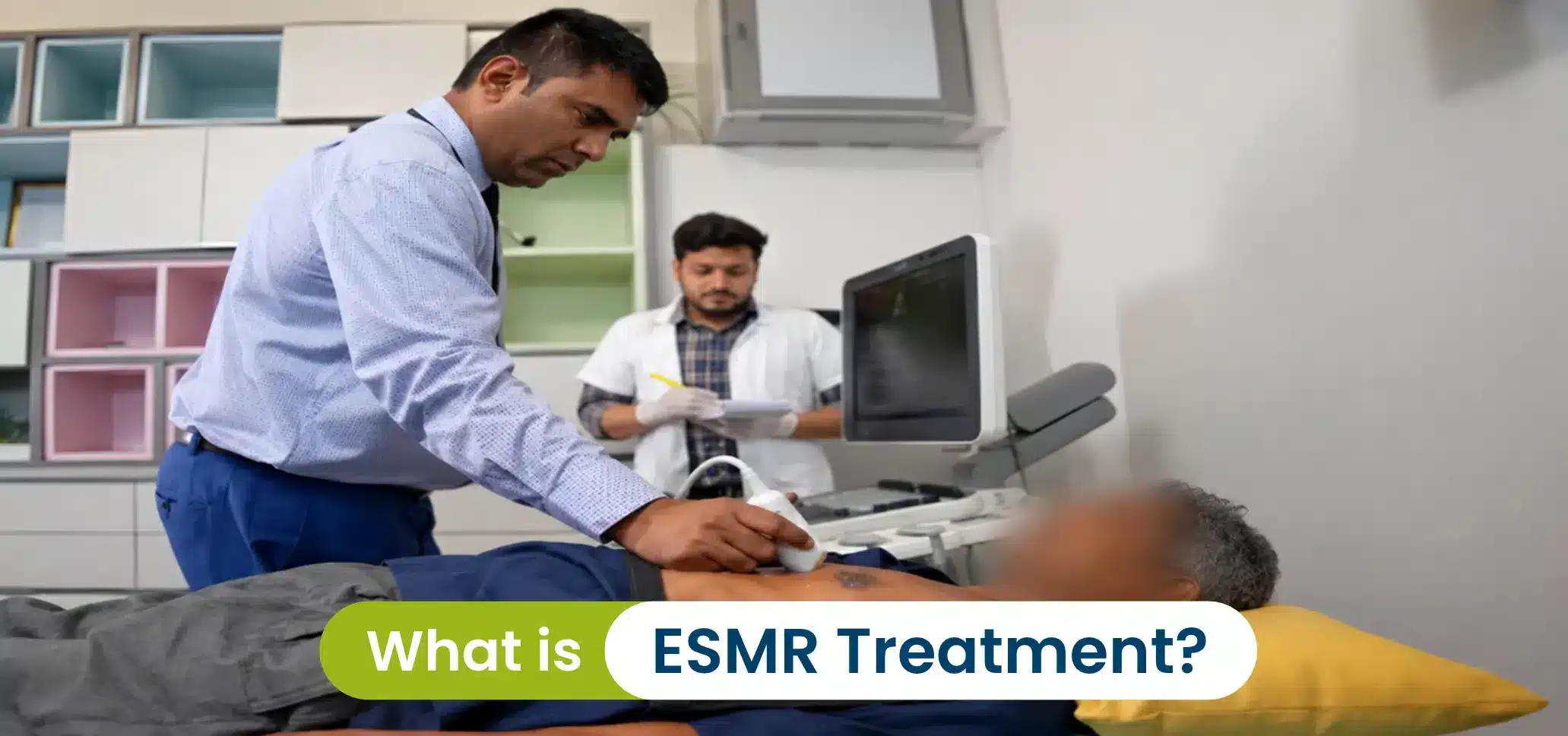
ESMR (Extracorporeal Shockwave Myocardial Revascularization) is a non-invasive therapy that sends gentle shockwaves through the chest wall towards areas of heart muscle that are not getting enough blood. There is no surgery, no incision and no anaesthesia, and you can go home after each session.
This guide explains how ESMR works, who it may help, what the evidence says, how safe it is, how it differs from EECP and what to know about cost in India, so you can have a better-informed conversation with your heart specialist before you decide.
What Is ESMR Treatment for Heart Patients?
ESMR stands for Extracorporeal Shockwave Myocardial Revascularization, and it is also called cardiac shock wave therapy. “Extracorporeal” simply means the treatment is delivered from outside the body. The shockwaves are low-energy pressure waves, far gentler than those used to break up kidney stones, and they are aimed at specific areas of the heart muscle with a poor blood supply.
ESMR is mainly used for refractory angina: chest pain from coronary artery disease that continues despite medicines, often when angioplasty or bypass surgery is not suitable. Lyfstyle Wellness in Ahmedabad offers ESMR for patients in exactly this situation.
How Does ESMR Therapy Work?
The shockwaves are expected to prompt the heart muscle to release growth factors that encourage tiny new blood vessels to form, a process called angiogenesis. Researchers describe the proposed effect as better blood flow through local widening of vessels and growth of new capillaries, though this mechanism is still postulated. In plain terms, ESMR aims to help the heart muscle receive more blood through its own smaller vessels, without touching the larger blocked arteries.
What Happens in an ESMR Session?
You lie back on a treatment couch with heart-monitoring sensors attached. A gel is applied to the chest, and the clinician moves a shockwave applicator over the target areas, often guided by imaging. Most people feel a light tapping or mild tingling. A session lasts about 20 to 30 minutes, and because no anaesthesia or hospital stay is needed, you go home afterwards.
The number of sessions depends on the device and your treatment plan. Protocols differ between centres, so ask your doctor for your exact schedule.
Who Can Have ESMR Treatment?
- Refractory angina
Chest pain or pressure that continues despite medicines. It often comes on with effort, such as climbing stairs or walking uphill, eases with rest and limits your daily routine. - Coronary artery disease where surgery is not suitable
This includes people who have been advised against angioplasty or bypass, or who have chosen not to have it. Common reasons include vessels too small or widespread to treat, or other health conditions that raise surgical risk. - Symptoms that continue after earlier procedures
Some people may be considered after a stent or bypass, at the cardiologist’s discretion. - Heart failure, in selected cases
Some centres use ESMR here too, for example in ischaemic heart failure, but the evidence is less established than for angina, so the decision should be individual.
Whether you are a good candidate is decided after a cardiac assessment, usually including an ECG, echo and stress test or imaging. ESMR is not for emergencies. If chest pain is new, getting worse or comes at rest, get urgent medical care rather than waiting for treatment.
Benefits of ESMR Treatment
- Non-invasive – No surgery, no incision, no anaesthesia and no hospital stay.
- Fewer angina episodes – In one Italian cohort of refractory angina patients, ESMR was linked to lower angina class, less nitroglycerin use and fewer hospital admissions at six months, compared with untreated patients.
- Short sessions – About 20 to 30 minutes each.
- Mild side effects – Most are temporary skin or comfort issues at the treatment site.
- An option when surgery is not suitable – It gives patients with limited choices something to discuss with their doctor.
Limitations of ESMR Treatment
- It is not a cure – ESMR does not remove blockages. Medicines and lifestyle changes are usually still needed.
- Results build slowly – Some people feel better within weeks, while others need months.
- Results vary – Some people improve noticeably, some a little and some not at all.
- Limited availability – It is offered mainly at specialised centres with the right equipment and trained staff.
Is ESMR Treatment Safe?
ESMR is generally well tolerated, and the overall risk is considered low. Common side effects are mild and temporary: discomfort at the treatment site, bruising or skin redness. Even so, every treatment carries some risk, so ask your doctor to explain it before you begin.
A proper cardiac assessment should come first. Doctors usually screen out, or take extra care with, people who have:
- A recent heart attack or unstable angina
- A blood clot inside the heart
- Serious, uncontrolled heart rhythm problems
- Infection or skin problems at the treatment site
- Pregnancy
This list is not complete. Tell your doctor about every condition, implanted device and medicine you have, and ask your centre what its own screening involves.
ESMR vs EECP: What Is the Difference?
Both are non-invasive options for angina that persists despite medicines. EECP uses inflatable leg cuffs to boost blood flow to the heart over a longer course of one-hour sessions. ESMR delivers shockwaves directly towards the heart in shorter sessions. Neither removes blockages, and the better fit depends on your symptoms, test results and overall health. You can read more in our guide to ESMR and EECP for angina and blockages.
ESMR Treatment Cost in India
The cost depends on the number of sessions, the centre and city, the device used, what the package includes (consultation, tests, follow-up) and whether you need a repeat course. Ask for a written breakdown before you begin, and check with your insurer about coverage. You can discuss the cost of ESMR Treatment with the team at Lyfstyle Wellness during your consultation.
Conclusion
ESMR is not a miracle fix, but for the right person it can be a well-tolerated, non-surgical way to ease angina and improve everyday comfort. Its limits matter too: it does not remove blockages, results build gradually and the research is still growing.
If your angina is not settling with medicines, the best next step is an assessment. At Lyfstyle Wellness in Ahmedabad, Dr. Swapnil Shah and the team can assess your case and advise on the most suitable option. You can book a consultation or call us for more information.
FAQs
1. What is ESMR treatment used for?
ESMR is mainly used for refractory angina, which is chest pain from coronary artery disease that continues despite medicines. It may also be considered for selected patients who cannot have angioplasty or bypass surgery and, with less established evidence, for heart failure. Your cardiologist decides whether it suits you.
2. Is ESMR treatment safe?
ESMR is non-invasive and needs no anaesthesia or hospital stay. Common side effects are mild and temporary, such as discomfort at the treatment site, bruising or skin redness. It is not suitable for everyone, so a proper cardiac assessment comes first and your doctor should explain the risks.
3. How long does an ESMR session take?
A session usually lasts about 20 to 30 minutes. The total number of sessions depends on the device and your treatment plan, so ask your doctor for the exact schedule. Some published protocols spread nine sessions over about three months, but plans differ between centres.
4. Can ESMR remove heart blockage?
No. ESMR does not clear plaque or open a narrowed artery. It aims to improve blood flow to the heart muscle through smaller vessels, which can ease angina. If a blockage must be physically opened, your doctor may advise angioplasty or bypass surgery instead.
5. How long does it take to see results from ESMR?
Results build gradually. Some people notice less chest pain within a few weeks, while others need several months to see a clear change, and response varies from person to person. Tracking symptoms and tests during treatment helps show whether it is working for you.