
What Is EECP Treatment? Benefits, Risks, Cost and What to Expect
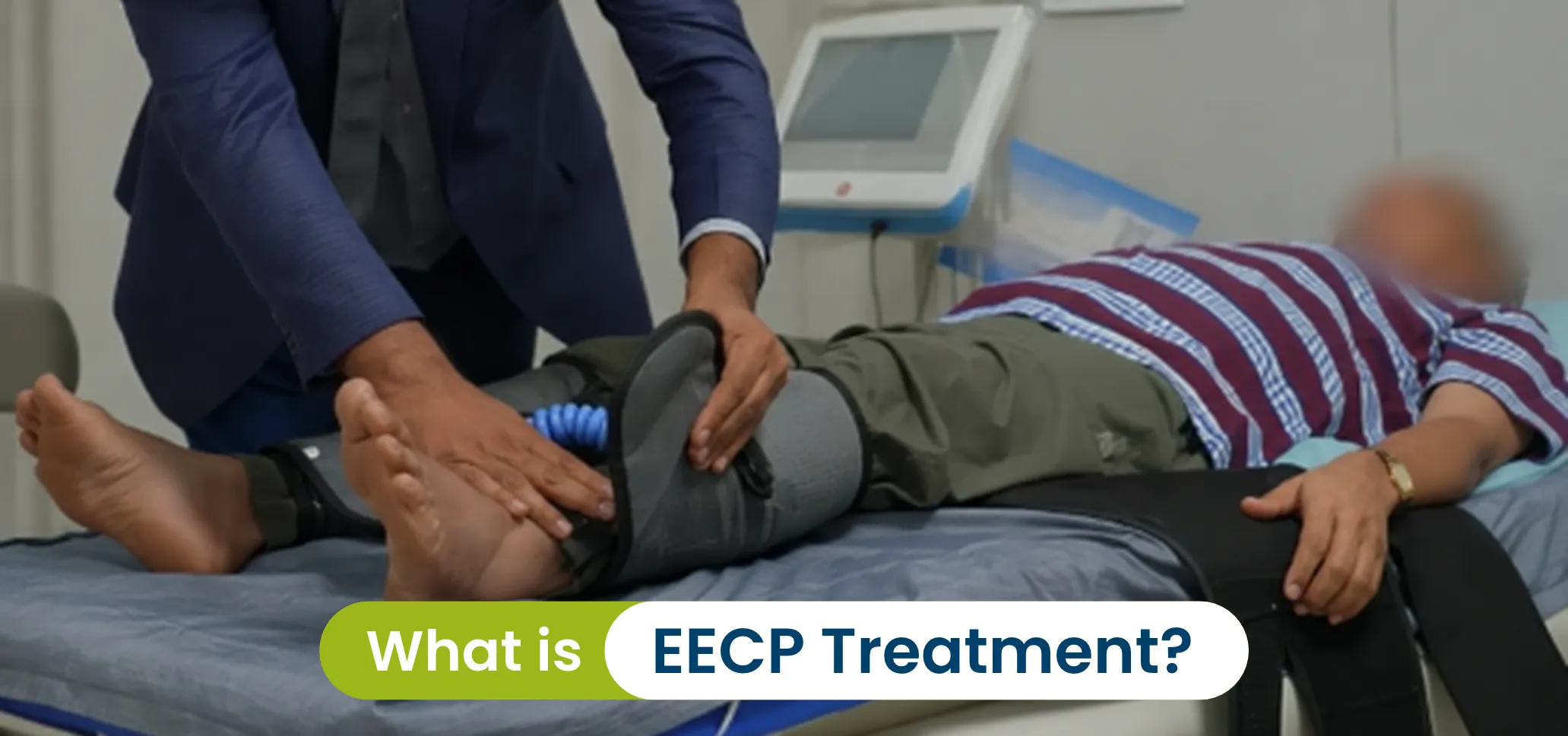
Living with chest pain is draining. A short walk or a flight of stairs can bring on that familiar tightness, and when medicines are not enough, or you have been told another stent or bypass is not the right step, it is natural to start looking for other options. That is often when people come across EECP and ask: what is EECP treatment?
Enhanced External Counterpulsation is a non-invasive therapy that uses inflatable cuffs around your legs to push more blood towards your heart. There is no surgery, no incision and nothing inserted into your body, and you go home after every session.
EECP is not a cure-all, and it does not suit everyone. So this guide keeps it straightforward: how EECP works, who it may help, its benefits and drawbacks, how safe it is, how it compares with angioplasty, what it costs in India and how many sessions to expect. By the end, you will be better prepared to ask your heart specialist the right questions.
What Is EECP Treatment for Heart Patients?
EECP is an outpatient therapy mainly used for chronic stable angina – the chest pain or pressure that appears when the heart muscle does not get enough blood. Doctors may also consider it for selected people with coronary artery disease who still have symptoms despite medicines, and in some centres for heart failure. Several EECP machines hold US FDA clearance, and the evidence is strongest for angina.
Some centres call EECP “natural bypass therapy”. The phrase is easy to remember but can mislead: EECP does not create a new graft or remove a blockage. It helps your own circulation work better around the problem.
How Does EECP Therapy Work?
An EECP session is a simple and relaxed experience. You lie on a treatment bed while cuffs are wrapped around your calves, thighs and buttocks. Small sensors track your heartbeat, and the machine times each squeeze to it, so the cuffs work in step with your heart. Here is what happens with every heartbeat:
- The cuffs inflate between heartbeats
- While the heart rests, the cuffs squeeze in sequence from the calves upward, pushing blood towards the heart and increasing blood flow to the heart muscle.
- The cuffs deflate just before the heart pumps
- The sudden release lowers pressure in the leg vessels, so the heart pumps against less resistance and works a little less.
- The cycle repeats over several weeks
- Across a full course, this may encourage tiny “collateral” vessels around narrowed areas to open up, although how much this happens differs from person to person.
At Lyfstyle Wellness, treatment starts with a stress test to see how much exercise you can handle and how your chest feels. An orientation session follows, including a short 15-minute trial of the machine, and your first full session begins the next day. A repeat stress test after a few sessions shows whether your symptoms and exercise ability are changing.
Benefits of EECP Treatment
- Non-invasive – No surgery, no anaesthesia and no incision. You stay awake and relaxed through each EECP session.
- May reduce chest pain – Clinical studies in chronic stable angina have reported fewer angina episodes and longer exercise time before symptoms appear.
- Supports blood flow to the heart – Timed leg compression increases circulation towards the heart muscle.
- Better day-to-day comfort – Less chest discomfort can make walking, taking stairs and daily tasks easier.
- An option when surgery is not suitable – People who cannot have further procedures, or who still have symptoms after them, can discuss EECP with their doctor.
Limitations of EECP Treatment
- Not suitable for everyone – Certain heart, valve, blood pressure and blood vessel conditions rule it out.
- It takes time – A standard course is around 35 one-hour sessions over about seven weeks. Missing sessions can reduce the benefit, so you need to be able to commit.
- It does not remove blockages – EECP does not clear plaque or open a narrowed artery. It helps manage symptoms rather than treat the blockage itself.
- Results vary – Some people improve a lot, some a little and a few not at all. Benefits can fade over time, and some patients need a repeat course.
- Not for emergencies or advanced disease – If you need urgent surgery or a procedure, do not delay it for EECP.
- Mild side effects. Skin soreness or bruising from the cuffs, leg or lower-back aching and tiredness can occur.
Is EECP Treatment Safe?
EECP is generally well tolerated when patients are carefully selected and sessions are supervised, which is why a proper assessment comes first. Doctors usually advise against it in people with:
- uncontrolled high blood pressure
- significant aortic valve leak or other severe valve disease
- an aortic aneurysm
- deep vein thrombosis or severe leg artery disease
- decompensated (worsening) heart failure
- serious heart rhythm problems
This list is not complete, so tell your doctor about every condition and medicine you take. EECP is meant for stable, long-term angina, not for a heart attack. If you ever have sudden severe chest pain, pain spreading to your arm or jaw, sweating or breathlessness, go to an emergency department immediately.
What Is the Success Rate of EECP Treatment?
There is no single success rate, because “success” is measured in different ways: fewer angina episodes, longer exercise time, better daily comfort. In the MUST-EECP trial, published in 1999, people who received EECP could exercise longer before showing signs of reduced blood flow and had fewer angina episodes than a comparison group. Registry data show that many patients report less angina after a course. A stress test before and during treatment is the practical way to see whether it is working for you.
Is EECP Treatment Better Than Angioplasty?
| EECP | Angioplasty (stenting) | |
|---|---|---|
| How it works | External leg cuffs improve blood flow | Balloon and stent open a blocked artery |
| Invasive? | No | Yes, through a catheter |
| Downtime | None, you go home after each session | Short hospital stay and recovery |
| Treats the blockage directly? | No | Yes |
| Best suited to | Chronic stable angina, especially when procedures are not suitable or symptoms persist | Heart attacks and high-risk or critical blockages |
EECP Treatment Cost in India
The cost depends on the number of sessions, the centre and city, what is included (consultations, stress tests, ECGs) and whether you need a repeat course. Ask what the full course covers before you begin so there are no surprises. At Lyfstyle Wellness, you can ask about cost during your consultation and orientation session, before the full course starts. Insurance coverage varies, so check with your insurer too.
How Many Sessions Are Required for EECP Treatment?
A standard course is about 35 sessions of one hour each, usually five days a week for around seven weeks. Your doctor may adjust this based on your condition and response. A session is simple: you lie back, relax and are monitored throughout. Keep taking your prescribed medicines, complete the whole course and mention any skin discomfort early so it can be managed.
Conclusion
EECP is not a cure-all, but for the right person it can be a well-tolerated, non-surgical way to ease angina and improve everyday comfort. Its limits matter too: it does not remove blockages, needs weeks of commitment and is unsuitable for some conditions.
The best next step is an assessment. At Lyfstyle Wellness in Ahmedabad, we check your eligibility first, including a stress test. You can book a consultation or call us for more information.
FAQs
1. What is EECP treatment used for?
EECP treatment is mainly used for chronic stable angina, which is recurring chest pain or pressure caused by reduced blood flow to the heart. Doctors may also consider it for selected people with coronary artery disease who still have symptoms despite medication, and in some cases for heart failure.
2. Is EECP treatment effective?
For many people with chronic stable angina, it can be. Studies have reported fewer angina episodes and longer exercise capacity after a course, though results vary and not everyone responds. A stress test before and during treatment helps show whether EECP is working for you.
3. What are the disadvantages of EECP treatment?
EECP needs around 35 one-hour sessions, so it takes real commitment. It does not remove blockages, is not suitable for everyone and works differently from person to person. Mild side effects such as skin soreness, bruising or leg aching can occur, and some people need a repeat course later.
4. Can EECP remove heart blockage?
No. EECP does not clear plaque or open a narrowed artery. It improves blood flow around the blockage and may encourage small collateral vessels to develop, which can ease symptoms. If a blockage needs to be physically opened, your doctor may advise angioplasty or bypass surgery.
5. How long does EECP therapy last?
Each session takes about one hour, and a standard course runs for around seven weeks. How long the benefit lasts differs. Some people stay improved for months or years, while others notice symptoms returning and need a repeat course. Your doctor can advise based on your response.